

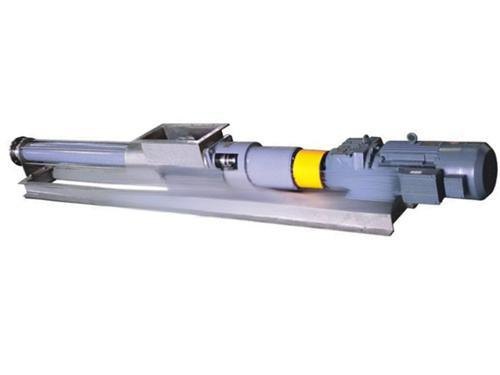
In industrial systems where aggressive fluids, corrosive chemicals, high temperatures, and demanding process conditions are common,
pump selection directly affects safety, uptime, maintenance cost, and product quality. A stainless steel screw pump
is one of the most practical choices for harsh chemical environments because it combines corrosion resistance, smooth and
low-pulsation conveying, strong self-priming capability, and reliable performance with a wide range of fluids.
This guide explains what a stainless steel screw pump is, why it is widely used in chemical processing, how it performs in
aggressive environments, and what specifications should be considered when selecting one for industrial applications.
The content below is written for direct use on SEO-friendly blog pages, category pages, and industry landing pages.
A stainless steel screw pump is a positive displacement pump designed to transfer liquids by means of rotating screw elements.
Depending on the design, the pump may use one screw, two screws, or multiple screws to move liquid along the axis of the rotor
housing. As the screws rotate, the fluid is trapped in sealed cavities and conveyed smoothly from the inlet to the outlet.
The key feature of a stainless steel screw pump is the use of stainless steel materials for the wetted parts, housing, shaft,
rotor, and other critical components. This material choice improves resistance to corrosion, oxidation, chemical attack, and
contamination. For harsh chemical environments, stainless steel offers a strong balance of durability, cleanability, and
long-term value.
Stainless steel screw pumps are commonly used for acids, alkalis, solvents, detergents, resins, polymers, oils, viscous fluids,
and other demanding media. Their ability to handle a broad viscosity range and maintain stable flow makes them especially
useful in chemical processing, coatings, petrochemicals, pharmaceuticals, wastewater treatment, food processing, and specialty
manufacturing.
Harsh chemical environments place extreme stress on pumping systems. The fluid being transferred may be corrosive, abrasive,
hot, volatile, or prone to crystallization. In some cases, the liquid may contain solids or vary in viscosity during the process.
Standard pumps often fail under these conditions because of corrosion damage, seal degradation, cavitation, leakage, and unstable
performance.
In chemical plants and industrial facilities, pump failure can lead to more than just downtime. It can cause contamination,
product loss, safety incidents, environmental exposure, and expensive maintenance. This is why industries increasingly choose
stainless steel screw pumps for chemical duty applications where dependable performance is essential.
The best pump for a harsh chemical environment must do more than move fluid. It must resist attack from the medium, maintain
stable pressure, support continuous operation, and reduce risk over the long term. A stainless steel screw pump addresses these
needs with a robust mechanical design and corrosion-resistant construction.
There are several reasons why stainless steel screw pumps are preferred in aggressive industrial applications. The following
advantages are among the most important for engineers, plant managers, procurement teams, and system designers.
Stainless steel is widely valued for its ability to resist corrosion in many chemical environments. While the exact level of
resistance depends on the stainless steel grade and the fluid composition, stainless steel performs significantly better than
carbon steel in corrosive service. This helps extend service life and reduce the frequency of repair or replacement.
Screw pumps are known for producing a smooth and continuous flow. Unlike some other pump types that create strong pulsation,
a stainless steel screw pump offers steady delivery with less vibration. This is especially important when the fluid is sensitive
to shear or when process stability is critical.
Many stainless steel screw pump configurations can self-prime effectively, which is valuable in applications where suction lines
may not always remain fully flooded. This reduces installation complexity and improves operating convenience in chemical systems.
Chemical processes often involve fluids that vary from thin solvents to thick resins and viscous additives. A stainless steel screw
pump can handle this wide range more reliably than many centrifugal pumps. This versatility simplifies pump selection across
multiple process stages.
Because screw pumps transfer fluid with relatively low shear, they are suitable for fluids that can be damaged by excessive
mechanical stress. This feature is useful in specialty chemical, pharmaceutical, and coating applications where product integrity
matters.
In corrosive service, frequent maintenance is a major cost driver. Stainless steel construction helps reduce damage from chemical
exposure, while the positive displacement design supports stable operation. As a result, plants can often reduce unplanned shutdowns
and achieve better lifecycle value.
Leak prevention and material compatibility are important for safety in chemical handling. A properly selected stainless steel screw
pump helps reduce the risk of leakage, contamination, and component failure in aggressive service conditions.
A screw pump works by trapping fluid in the spaces between the screw threads and the pump casing. As the screws rotate, the
fluid is moved axially from the suction side to the discharge side. The pumping action is continuous and smooth, which makes
screw pumps ideal for controlled transfer applications.
In a stainless steel screw pump, the internal wetted components are made of stainless steel to improve resistance to corrosive
media. Some designs may also use specialized sealing systems, bearing materials, and coatings to improve compatibility with
harsh chemicals.
The positive displacement principle means the pump delivers a relatively fixed volume of fluid per revolution. This makes it
suitable for applications requiring stable flow, metering, circulation, transfer, and pressurized feed.
Stainless steel screw pumps are used across many industries where corrosive or demanding fluids must be handled safely and
efficiently. Common application areas include:
In each of these applications, the ability to maintain reliable flow while resisting chemical attack is a major advantage.
The stainless steel screw pump is often selected because it supports consistent operation in environments where less robust pump
types may struggle.
Material selection is one of the most important factors in pump performance. In harsh chemical service, standard materials may
degrade quickly due to corrosion, pitting, stress cracking, or surface erosion. Stainless steel offers better durability in many
of these conditions because it forms a protective oxide layer that helps resist chemical attack.
Stainless steel also provides good mechanical strength, heat resistance, and cleanability. These characteristics matter in
industries where hygiene, contamination control, and process consistency are important. Even in non-food chemical systems,
stainless steel can help reduce residue buildup and make maintenance easier.
Different grades of stainless steel are used depending on the application. For example, some grades offer better resistance to
chlorides, while others are more suitable for general chemical service or high-temperature use. Selecting the correct grade is
essential for maximizing pump life and performance.
To understand why stainless steel screw pumps are so valuable in harsh chemical environments, it helps to compare them with
other common pump technologies.
| Pump Type | Main Strengths | Limitations in Harsh Chemicals | Best Fit |
|---|---|---|---|
| Stainless Steel Screw Pump | Corrosion resistance, smooth flow, wide viscosity range, self-priming, low pulsation | Needs correct material selection and seal compatibility | Corrosive, viscous, and sensitive chemical fluids |
| Centrifugal Pump | Simple design, good for low-viscosity fluids, high flow rates | Less effective with viscous fluids, can lose efficiency with changing conditions | Clean, low-viscosity liquids |
| Gear Pump | Good for metering and viscous fluids, compact design | May have higher shear and wear issues, material compatibility is critical | Oils, resins, and controlled transfer |
| Diaphragm Pump | Good for abrasive and chemical fluids, dry-running tolerance | Pulsating flow, lower efficiency in some transfer duties | Chemical dosing and slurry handling |
| Peristaltic Pump | No seal contact with fluid, good for aggressive chemicals | Tube wear, limited pressure and flow in larger industrial duties | Metering and low-to-medium flow chemical transfer |
In many chemical applications, the stainless steel screw pump provides a strong balance of resistance, efficiency, and process
stability. It is especially attractive when both material compatibility and fluid-handling quality are important.
Selecting the right stainless steel screw pump requires attention to technical specifications. These parameters determine whether
the pump can safely and efficiently handle the intended chemical media.
| Specification | Why It Matters | Typical Considerations |
|---|---|---|
| Material Grade | Determines corrosion resistance and chemical compatibility | 304, 316, duplex, or other stainless grades depending on media |
| Flow Rate | Defines how much liquid the pump can move per unit time | Match process demand and pipeline capacity |
| Pressure Rating | Ensures the pump can operate safely under discharge pressure | Check working pressure and peak pressure conditions |
| Temperature Range | Affects seal life, material expansion, and fluid behavior | Consider hot chemicals, thermal cycling, and cleaning conditions |
| Viscosity Range | Shows what fluid thickness the pump can handle effectively | Useful for solvents, resins, polymers, and concentrated chemicals |
| Suction Lift / Self-Priming | Important for installations where the pump is above fluid level | Verify priming capability and suction conditions |
| Seal Type | Critical for leak prevention and chemical safety | Mechanical seals, packing, or specialized seal systems |
| Speed Range | Influences wear, flow stability, and shear level | Lower speeds may improve service life in abrasive or sensitive fluids |
| Inlet/Outlet Connection | Affects installation compatibility | Flanged, threaded, or sanitary connections depending on use |
| Motor Compatibility | Ensures proper power and control | Check power supply, explosion-proof needs, and frequency control |
Different stainless steel grades are chosen according to the chemical environment, operating temperature, and expected service
life. Although the exact selection should be based on fluid analysis and engineering review, the following grades are commonly
discussed in industrial pump applications.
| Stainless Steel Grade | Main Characteristics | General Chemical Service Use |
|---|---|---|
| 304 Stainless Steel | Good general corrosion resistance, widely used, cost-effective | Moderately aggressive fluids and general industrial service |
| 316 Stainless Steel | Improved resistance to chlorides and many corrosive media | More aggressive chemical environments and stronger corrosion exposure |
| 316L Stainless Steel | Low carbon version with improved weldability and corrosion performance | Clean service and chemical transfer requiring better resistance to sensitization |
| Duplex Stainless Steel | High strength and improved resistance to stress corrosion cracking | Severe chemical and offshore-type service conditions |
| Special Alloy Stainless Steel | Enhanced protection for very demanding or highly specific chemicals | Extreme environments where standard grades are not enough |
The best grade depends on the exact chemical composition, concentration, temperature, and operating pressure. A stainless steel
screw pump used in acid transfer may need a different material setup than one used for solvent handling or caustic circulation.
Even when stainless steel is used, pump performance in harsh environments depends on many operating factors. Understanding these
factors helps reduce failure risk and improve service life.
For harsh chemical environments, the best pump is not simply the one with the highest material grade. It is the one that fits
the process conditions as a complete system.
Stainless steel screw pumps provide a range of practical business and operational benefits. These benefits are important not only
for engineering teams but also for operations, maintenance, and procurement departments.
| Benefit | Operational Value |
|---|---|
| Longer Service Life | Improved resistance to corrosion and wear can extend pump life in aggressive service |
| Lower Downtime | More reliable operation reduces unexpected shutdowns and production loss |
| Better Fluid Control | Stable discharge supports accurate and consistent process performance |
| Reduced Product Loss | Lower leakage and smoother operation help minimize waste |
| Improved Safety | Suitable material selection helps reduce exposure to hazardous chemicals |
| Lower Lifecycle Cost | Even if initial cost is higher, long-term ownership cost may be lower |
| Greater Process Flexibility | Can handle a range of chemicals and viscosities in one facility |
Stainless steel screw pumps are not limited to one sector. Their adaptability makes them useful across multiple industries that
process corrosive or high-value fluids.
Choosing the right stainless steel screw pump starts with process data. Engineers should evaluate fluid properties, operating
conditions, safety requirements, and maintenance expectations before finalizing a design.
A well-selected stainless steel screw pump can deliver long-term reliability and better overall process economics. The goal is
not only to move fluid, but to move it safely, efficiently, and consistently.
Regular maintenance is essential in harsh chemical service. Even corrosion-resistant pumps need inspection to ensure continued
safe performance.
Preventive maintenance helps preserve the advantages of stainless steel construction and keeps the pump operating within its
design envelope.
The following keyword phrases are naturally relevant to content about this topic and can support search visibility when used in
a clear, useful, and non-spammy way:
For SEO purposes, these phrases can be distributed across headings, paragraphs, alt text, meta descriptions, and internal links
where appropriate.
Its combination of corrosion-resistant materials, positive displacement operation, and smooth flow makes it well suited for
many aggressive chemical applications.
Yes. One of the major advantages of a screw pump is its ability to handle a wide viscosity range, including thick and sticky
process liquids.
Not always. The correct stainless steel grade must be matched to the chemical, concentration, temperature, and operating
conditions. In some cases, special alloys or additional protection may be needed.
Yes. Screw pumps are widely used when smooth, stable, low-pulsation flow is required.
Often yes. Seal selection is very important in chemical environments to prevent leakage and improve reliability.
A stainless steel screw pump is a strong, practical solution for harsh chemical environments because it combines chemical
resistance, stable flow, broad fluid-handling capability, and long-term durability. For industries that depend on safe and
efficient chemical transfer, this pump type offers a dependable balance between performance and protection.
When properly selected for the fluid, temperature, pressure, and seal requirements of the application, a stainless steel screw
pump can improve reliability, reduce maintenance, and support safer process operation. For many chemical service scenarios, it
remains one of the most versatile and dependable pump choices available.

Copyright ? Jiangsu Longjie Pump Manufacturing Co., Ltd.



 Phone
Phone
Comment
(0)