The Future of Screw Pumps: What’s Next in Pump Technology?
Screw pumps are entering a new era. Driven by digitalization, stricter efficiency regulations, and tougher process requirements, the future of screw pump technology will look very different from the past. This in?depth guide explores how screw pumps work today, where innovation is heading, and what end users, engineers, and plant managers should expect from the next generation of screw pump solutions.
This article focuses on industry?wide trends, generic technical information, and common best practices. It does not promote or recommend any specific brand or manufacturer, making it suitable for use as an informative blog post, category page, or industry resource.
1. What Is a Screw Pump? Core Definition and Principles
A screw pump is a positive displacement pump that uses one or more intermeshing screws to move fluid along the pump axis. As the screws rotate, sealed cavities form between the screw flights and the pump casing, pushing the liquid from the suction side to the discharge side in a continuous, low?pulsation flow.
1.1 Basic Working Principle
The working principle of screw pumps can be summarized in three steps:
- Suction: As the screws rotate, voids open at the suction port, creating low pressure that draws fluid into the pump.
- Transfer: Fluid is trapped in cavities between the screw flights and the housing, then transported axially along the length of the screws.
- Discharge: The cavities decrease in volume as they approach the discharge port, forcing the fluid out at a stable, continuous rate.
This mechanism results in:
- Smooth, virtually pulsation?free flow
- Ability to handle a wide range of viscosities
- Good suction performance and self?priming capability (depending on design)
1.2 Common Types of Screw Pumps
Although designs vary, most industrial screw pumps fall into these categories:
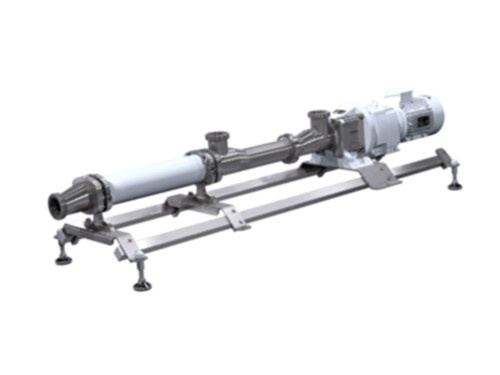
- Single screw pump (also called Progressive cavity pump): one helical rotor running inside a stator with an internal helical cavity.
- Two?screw pump: two meshing screws that can be either timing?gear driven (no metal?to?metal contact) or hydrodynamically lubricated.
- Three?screw pump: one driven power rotor and two idler rotors, often used for lubricating oils and hydraulic fluids.
- Multi?screw configurations: four?screw and other variations for specific high?flow or high?pressure applications.
Table 1 – Typical Screw Pump Types and Use Cases | Type | Rotor Configuration | Typical Fluids | Common Applications |
| Single Screw (Progressive Cavity) | 1 rotor, 1 stator | Highly viscous, shear?sensitive, solids?laden | Sludge, wastewater, food pastes, polymers, slurries |
| Two?Screw | 2 intermeshing screws | Low to high viscosity, including multiphase | Crude oil, multiphase production, loading/unloading |
| Three?Screw | 1 drive + 2 idler screws | Clean, lubricating fluids | Lube oil systems, hydraulic systems, fuel oil transfer |
| Four?Screw / Multi?Screw | Multiple synchronized screws | Medium to high viscosity, large volumes | Pipeline transport, marine fuel, process transfer |
2. Why Screw Pumps Remain Critical in Modern Industry
Screw pumps occupy a unique niche among positive displacement and dynamic pump technologies. Their characteristics make them indispensable across many sectors:
- Oil and gas: multiphase pumping, crude oil transfer, pipeline boosting, tank stripping.
- Power generation: lube oil circulation, fuel oil supply, hydraulic systems.
- Chemical and petrochemical: viscous chemicals, solvents, polymers, resins.
- Marine: fuel transfer, ballast systems, bilge and sludge handling.
- Food and beverage: chocolate, syrups, dough, sauces and pastes (typically with sanitary designs).
- Water and wastewater: sludge transfer, dewatering feed, polymer dosing (progressive cavity types).
The same core advantages that made screw pumps successful in the past are still relevant today—and they also shape the direction of future development.
2.1 Key Technical Advantages
- Low pulsation, smooth flow: ideal for sensitive processes, precise dosing, and long piping systems.
- High efficiency at varying viscosity: maintains performance with thin and thick fluids.
- Self?priming and good NPSH characteristics: supports suction lift and challenging inlet conditions (design?dependent).
- Wide operating range: can handle high pressures, large flow rates, and broad temperature ranges.
- Long service life: especially in designs where screws do not contact each other.
2.2 Limitations That Drive Innovation
At the same time, several limitations of traditional screw pumps are pushing the industry toward new technologies:
- Wear in abrasive or solids?laden fluids increases maintenance costs.
- Energy losses at partial load or with lower viscosity fluids.
- Leakage through internal clearances reduces volumetric efficiency.
- Mechanical complexity in multi?screw designs can complicate service.
- Traditional seals may not meet emerging environmental or zero?emission requirements.
The future of screw pumps is largely about overcoming these limitations through advanced materials, smart controls, and innovative mechanical designs.
3. Macro Trends Shaping the Future of Screw Pumps
Several global trends are redefining what end users expect from screw pump technology:
- Energy efficiency regulations: tighter efficiency standards and decarbonization targets are driving demand for more efficient pumps and systems.
- Digital transformation: Industry 4.0 and IIoT (Industrial Internet of Things) require pumps that are sensor?rich, connected, and data?driven.
- Stricter environmental rules: low?emission requirements push for seal?less designs, leak detection, and cleaner lubrication concepts.
- Process complexity: more demanding fluids, higher pressures, and higher temperatures increase the need for advanced screw pump designs.
- Total cost of ownership focus: users prioritize lifecycle cost, reliability, and predictive maintenance over simple purchase price.
These macro trends directly influence how next?generation screw pumps are designed, specified, and operated.
4. Design Innovations: Where Screw Pump Engineering Is Going
4.1 Advanced Rotor and Housing Geometry
Future screw pumps will rely heavily on advanced engineering tools to optimize geometry:
- Computational Fluid Dynamics (CFD): improves understanding of internal flow, pressure distribution, and cavitation risk.
- Finite Element Analysis (FEA): optimizes screw stiffness, deflection control, and vibration behavior.
- 3D?printed prototypes: allow rapid testing of new rotor profiles and housing shapes.
Key goals of geometry optimization:
- Reduce internal leakage paths to raise volumetric efficiency.
- Minimize noise and vibration through smoother flow channels.
- Increase tolerance to solids while maintaining efficiency.
- Lower torque peaks and mechanical stress for longer life.
4.2 Next?Generation Materials and Coatings
Material science is a core driver of future screw pump performance. Expect wider use of:
- Corrosion?resistant alloys such as duplex and super?duplex stainless steels for aggressive media.
- Surface?hardening treatments for screws and liners to resist wear in abrasive service.
- Advanced elastomers in stators (for single screw pumps) that withstand high temperature, chemicals, and rapid pressure cycling.
- Low?friction coatings (e.g., PTFE?based, DLC?type) on wet parts to reduce friction losses and improve start?up performance.
- Composite materials for certain non?critical components to reduce weight and inertia.
These improvements lead to higher allowable pressures, longer maintenance intervals, and better compatibility with new process fluids.
4.3 Seal?Less and Low?Emission Designs
Mechanical seals remain a common failure point and a source of emissions in pumps. Future screw pumps will more often feature:
- Magnetic drive screw pumps: torque is transmitted through a static containment shell, eliminating dynamic shaft seals and reducing leakage.
- Canned motor designs: the motor and pump are integrated in a hermetically sealed unit, suitable for hazardous or toxic fluids.
- Enhanced seal systems: where mechanical seals are still used, dual seals, barrier fluids, and advanced seal face materials will gain importance.
Leak detection sensors and automatic shutdown logic will also play a larger role in protecting the environment and improving plant safety.
4.4 Smart Drive Systems and Speed Control
Variable speed drives (VSDs) and intelligent motor control centers are becoming standard components of modern screw pump systems:
- Optimized energy use: pump speed can be matched precisely to process demand, reducing throttling losses.
- Soft start and stop: reduces mechanical stress on screws, couplings, and bearings.
- Torque monitoring: provides indirect insight into viscosity changes, blockage, or wear.
- Integration with plant automation: via open industrial protocols for remote control and performance optimization.
As drive technology evolves, expect screw pumps to operate over a wider controlled speed range without compromising reliability.
5. Digitalization and Smart Screw Pump Technology
5.1 Sensor Integration and Real?Time Monitoring
Future screw pumps will be equipped with a broad range of sensors to capture key operating data, such as:
- Discharge and suction pressure
- Flow rate (either measured or calculated)
- Pump and bearing temperatures
- Vibration levels on casing and bearings
- Power consumption and motor current
- Valve positions and seal system parameters
These data streams enable:
- Instant detection of abnormal operation or cavitation.
- Monitoring of wear trends and seal health.
- Verification of duty point and efficiency.
5.2 Predictive Maintenance and Analytics
Advanced analytics and predictive maintenance will be central to the future of screw pump management:
- Condition?based maintenance: service tasks triggered by actual equipment condition, not fixed time intervals.
- Failure prediction models: using historical vibration, temperature, and power data to estimate remaining useful life.
- Automated alerts: notifications to maintenance teams when critical thresholds are approached.
- Root cause analysis: cross?correlating pump data with process conditions to understand recurring issues.
By moving from reactive to predictive maintenance, operators can reduce unplanned downtime, extend part life, and lower total operating costs.
5.3 Integration with IIoT and Cloud Platforms
The next generation of screw pumps will not operate in isolation. They will be fully integrated into digital ecosystems:
- Edge devices pre?process data at the pump skid, reducing bandwidth and enabling local control loops.
- Cloud?based dashboards provide fleet?wide visibility of pump health across multiple sites.
- Digital twins (virtual models) simulate performance under different operating scenarios.
- Remote updates and software upgrades improve diagnostics and performance over time.
This connected ecosystem will transform how screw pumps are specified, commissioned, monitored, and maintained.
6. Energy Efficiency: A Central Theme for Future Screw Pumps
Energy efficiency is one of the most important topics for the future of all pump technologies, including screw pumps. Power consumption over the life of a pump can far exceed its purchase cost.
6.1 Factors Influencing Screw Pump Efficiency
Overall efficiency is the product of several components:
- Volumetric efficiency: how much internal leakage occurs between screws and casing.
- Hydraulic efficiency: how effectively energy is transferred to the fluid with minimal turbulence and friction.
- Mechanical efficiency: losses in bearings, seals, and drive components.
- Motor and drive efficiency: performance of the electric motor and variable speed drive.
Future screw pumps will target each of these areas with design improvements, better materials, and smarter operating strategies.
6.2 System?Level Efficiency
Beyond pump design, significant savings can be achieved at the system level:
- Right?sizing: selecting pumps sized for realistic conditions, not only for conservative extremes.
- Speed control vs. throttling: using variable speed drives instead of control valves to adjust flow.
- Optimized piping layout: reducing friction losses and avoiding unnecessary fittings.
- Proper suction design: minimizing NPSH issues and cavitation to protect efficiency.
In the future, intelligent control systems may automatically adjust pump speed and system configuration to maintain the highest efficiency point.
7. Emerging Application Areas for Screw Pumps
7.1 Renewable and Low?Carbon Energy
As the world transitions to greener energy sources, screw pumps will be adapted to:
- Biofuels and renewable diesel: handling viscous renewable feedstocks and finished products.
- Hydrogen?related fluids: supporting processes in hydrogen production and storage (for compatible media).
- Carbon capture and storage (CCS): transferring CO2?rich fluids in capture and injection systems.
- Geothermal applications: circulating high?temperature fluids with challenging compositions.
New materials, seals, and design standards will be required to address these novel media and operating conditions.
7.2 Advanced Chemical and Polymer Processes
Future chemical processes will demand:
- Higher temperatures and pressures.
- More aggressive solvents and reactants.
- Tighter control of shear and residence time.
Screw pumps with low pulsation, shear?sensitive handling, and advanced corrosion?resistant materials are well positioned to serve these requirements.
7.3 Hygienic and Sanitary Markets
For food, beverage, pharmaceutical, and cosmetics industries, the future of screw pumps will include:
- Hygienic designs with minimal dead zones.
- Full CIP (Clean?In?Place) and SIP (Steam?In?Place) capability.
- Compliance with relevant hygienic standards (e.g., where applicable in a given region).
- Gentle handling to protect product texture and structure.
Low pulsation and high dosing accuracy make screw pumps attractive for filling, batching, and ingredient transfer systems.
8. Typical Specification Ranges and Technical Data
The following tables summarize generic specification ranges for screw pumps. Actual values depend on design, materials, and duty conditions, but the data illustrate how flexible screw pump technology can be.
Table 2 – Typical Operating Ranges for Screw Pumps | Parameter | Single Screw | Two?Screw | Three?Screw |
| Flow Rate (approx.) | Up to ~400 m3/h
(up to ~1,760 gpm) | Up to ~1,500 m3/h
(up to ~6,600 gpm) | Up to ~300 m3/h
(up to ~1,320 gpm) |
| Differential Pressure | Up to ~48 bar
(~700 psi) | Up to ~80 bar
(~1,160 psi) or more (design?dependent) | Up to ~100 bar
(~1,450 psi) for specialized designs |
| Viscosity Range | Up to ~1,000,000 cSt | ~1 to 100,000 cSt | ~3 to 3,000 cSt (typically lubricating) |
| Temperature Range | Approx. ?20°C to 180°C
(?4°F to 356°F), depending on elastomers | Approx. ?40°C to 350°C
(?40°F to 662°F), materials?dependent | Approx. ?20°C to 250°C
(?4°F to 482°F), depending on materials |
| Typical Fluids | Sludges, slurries, adhesives, food pastes | Crude oil, multiphase, viscous chemicals | Lube oils, fuels, hydraulic oils |
In the future, incremental improvements in materials, seals, and geometry are expected to extend these ranges further, especially for high?pressure, high?temperature, and ultra?viscous applications.
9. Comparing Screw Pumps with Other Pump Technologies
Understanding how screw pumps compare with alternative technologies helps clarify where screw pumps are likely to grow in use.
Table 3 – Screw Pumps vs. Other Common Pump Types | Feature | Screw Pumps | Centrifugal Pumps | Gear Pumps | Diaphragm Pumps |
| Flow Pulsation | Very low, smooth | Low to moderate | Low to moderate | High (unless damped) |
| Viscosity Handling | Excellent, wide range | Limited at higher viscosities | Good for moderate?high viscosity | Good, especially for slurries |
| Shear Sensitivity | Low shear, gentle | Higher shear, may damage sensitive fluids | Moderate shear | Low to moderate, depends on valves |
| Efficiency at Varying Duty | Good with variable speed | Best near Best Efficiency Point | Good, but can be noisy | Good at low flows |
| Solids Handling | Single screw excellent; multi?screw more limited | Limited without special design | Poor for large solids | Very good for slurries |
| Typical Applications | Viscous transfer, lube oil, multiphase | Water, thin liquids, general services | Oil transfer, lubrication, fuels | Chemical dosing, slurry transfer |
Future screw pump designs will further strengthen their position wherever low pulsation, high viscosity tolerance, and gentle handling are required, while new efficiency and digitalization features will make them competitive in more general transfer duties.
10. Installation and System Design Trends
10.1 Skid?Mounted and Modular Systems
Future screw pumps are likely to be supplied more frequently as complete, skid?mounted packages:
- Including pump, motor, drive, baseplate, instrumentation, and control panel.
- Pre?tested and pre?configured for faster commissioning.
- Designed with plug?and?play connectivity to plant control systems.
Modular skids allow plants to add capacity or reconfigure systems more easily as process requirements change.
10.2 Noise and Vibration Reduction
Tighter regulations and worker safety concerns increase the importance of:
- Improved screw profiles and housing geometry to minimize hydrodynamic noise.
- Better foundation and alignment practices to reduce vibration.
- Balanced rotor designs and optimized bearing arrangements.
- Acoustic enclosures where necessary, integrated into the skid layout.
The future of screw pumps will emphasize not only performance but also acoustic comfort and compliance with noise limits.
11. Maintenance, Reliability, and Lifecycle Management
11.1 Maintenance Strategies for Future Screw Pumps
As technology advances, maintenance will become more strategic and data?driven:
- Condition monitoring: using online measurements to track bearing condition, seal wear, and rotor health.
- Standardized spare parts: modular designs enabling quick replacement of wear components.
- Remote diagnostics: specialists can analyze pump data without traveling to site.
- Lifecycle documentation: digital records of all interventions, upgrades, and operating history.
These changes reduce downtime and support more accurate budgeting for maintenance activities.
11.2 Reliability Engineering and Failure Prevention
Future screw pump systems will rely on reliability?centered design principles:
- Careful selection of materials and coatings based on process chemistry.
- Optimized bearing and seal choices for each duty.
- Built?in protection features such as dry?run detection, overload protection, and thermal monitoring.
- Integration into plant?wide reliability programs using standardized KPIs.
The overall result will be longer mean time between failures (MTBF) and improved availability of critical pumping services.
12. Regulatory and Standardization Trends
Future screw pump design and operation will increasingly be influenced by:
- Energy efficiency regulations: requiring certain minimum efficiency levels or performance labeling.
- Environmental compliance: limits on emissions and leakage, requirements for spill containment, and restrictions on certain seal support fluids.
- Industry standards and guidelines: covering design, testing, noise, vibration, and safety aspects.
- Cybersecurity standards: as pumps become connected devices, secure communication and control become mandatory.
Designers of next?generation screw pumps will need to meet these evolving regulatory and standardization requirements while still delivering performance and reliability.
13. Key Trends Summary: What’s Next for Screw Pump Technology?
The future of screw pumps will be defined by a combination of mechanical innovation, digital transformation, and application?driven development. The most important trends include:
- More efficient designs: optimized rotor geometry, better clearances, and advanced materials to reduce losses and energy consumption.
- Smarter pumps: embedded sensors, real?time monitoring, predictive maintenance, and integration with IIoT platforms.
- Seal?less and low?emission concepts: magnetic drives, canned motors, and enhanced seal systems for environmentally critical duties.
- Extended operating envelopes: higher temperatures, higher pressures, and more challenging fluids, driven by materials and design improvements.
- Application?specific engineering: tailored solutions for renewables, advanced chemicals, hygienic industries, and multiphase production.
- Lifecycle optimization: focus on total cost of ownership, reliability, and maintainability rather than initial price alone.
For system designers, plant engineers, and operators, staying informed about these trends will be essential for specifying and managing screw pump systems that remain competitive, compliant, and efficient in the years ahead.
14. Practical Considerations When Planning Future?Ready Screw Pump Systems
When selecting or upgrading screw pump systems with the future in mind, consider:
- Scalability: design with spare capacity and modular skids for future expansion or process changes.
- Connectivity: ensure pumps and drives support standard communication protocols for easy integration.
- Sensor strategy: specify the right combination of pressure, temperature, vibration, and flow data points to support diagnostics.
- Material compatibility: anticipate potential process changes (new products, higher temperatures) and select materials accordingly.
- Service infrastructure: plan for access, lifting, and safe maintenance around the pump skid.
By addressing these aspects early in the design phase, operators can reduce the risk of obsolescence and ensure that their screw pump installations remain aligned with evolving industrial and regulatory requirements.
15. Conclusion: Long?Term Outlook for Screw Pumps
Screw pumps have a long history in critical industries, and their future is equally robust. As energy efficiency, digitalization, environmental performance, and process complexity continue to shape industrial pumping, screw pump technology will evolve in step. Expect future screw pumps to be:
- More efficient and flexible across a wide range of operating conditions.
- More intelligent, with built?in diagnostics and connectivity.
- More reliable and easier to maintain, thanks to predictive tools and better materials.
- Better suited to emerging applications in renewable energy, advanced chemicals, and hygienic processing.
For engineers and plant operators planning long?term investments, understanding these trends is essential. By specifying modern, future?ready screw pump systems, facilities can improve reliability, reduce lifecycle costs, and prepare for the next generation of industrial processes and regulations.






 Phone
Phone
Comment
(0)