

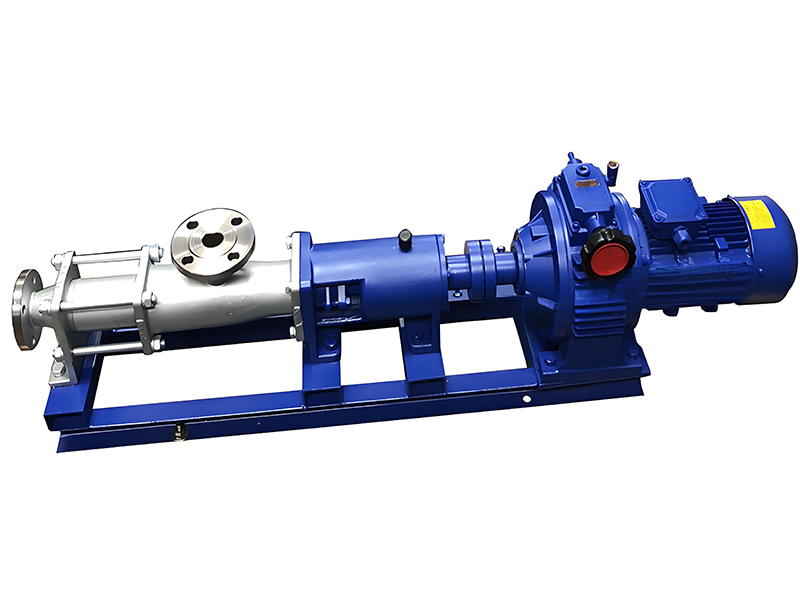
When handling thick, sticky, or hard-to-flow media, choosing the best screw pump for viscous fluids can make a major difference in system performance, energy efficiency, product quality, and maintenance cost. In many industrial applications, viscous fluids create challenges that standard centrifugal pumps cannot solve efficiently. Screw pumps, by contrast, are designed to move high-viscosity liquids smoothly, steadily, and with low shear.
This guide provides a clear, SEO-friendly overview of screw pumps for viscous fluids, including definitions, working principles, common applications, key selection factors, advantages, limitations, and a helpful specification table. The content is written for use in blog posts, category pages, industry pages, and technical resource sections. It focuses on general industry knowledge only and does not recommend any specific company or brand.
A screw pump is a positive displacement pump that uses one or more rotating screws to move fluid along the pump axis. As the screw turns, it creates sealed cavities that transport liquid from the inlet to the outlet in a smooth and continuous flow. This makes screw pumps especially effective for viscous fluids, because the pumping action is stable and less affected by changes in fluid thickness.
Screw pumps are commonly used in industries where fluids are dense, lubricating, shear-sensitive, or prone to pulsation problems. Their ability to handle high viscosity, maintain flow consistency, and minimize product degradation makes them a popular choice for demanding pumping tasks.
Viscous fluids resist movement, which means they require more force to transport through pipes and equipment. Examples include oils, syrups, molasses, creams, resins, adhesives, slurries, and heavy industrial chemicals. A pump must overcome this resistance without causing excessive heat, mechanical stress, or product breakdown.
Screw pumps for viscous fluids are valued because they:
Compared with other pump types, screw pumps often deliver better performance when the fluid is too thick for centrifugal pumps or when product integrity must be preserved.
The operating principle of a screw pump is based on the movement of one or more screws inside a close-fitting housing. The screw geometry forms enclosed chambers that trap the liquid and move it forward as the rotor turns. This positive displacement action allows the pump to deliver a nearly constant volume per revolution.
There are several common screw pump designs:
Each design offers different performance characteristics, but all are built around the same core idea: move fluid through trapped chambers for consistent flow and dependable pressure generation.
Choosing the best screw pump for viscous fluids often comes down to performance benefits that directly address the difficulties of thick media.
Screw pumps provide steady flow with minimal pulsation. This is especially important in processes where pressure stability is critical or where vibration can damage downstream equipment. Smooth delivery also helps improve metering accuracy in many systems.
One of the main reasons to choose a screw pump is its ability to handle liquids with high viscosity. As fluid thickness increases, screw pumps can often maintain reliable output better than centrifugal pumps, which lose efficiency when fluid resistance rises.
Some viscous fluids are sensitive to shear, heat, or mechanical disturbance. Screw pumps can transfer these products with less agitation, helping preserve product texture, consistency, and quality. This is important in food, cosmetics, pharmaceutical, and specialty chemical applications.
Many screw pump designs offer good suction performance and can help with self-priming in certain conditions. This is beneficial when the fluid source is below the pump or when pipelines are partially filled.
Screw pumps are known for stable transfer efficiency, especially when the application involves viscous liquids under moderate to high pressure. Their positive displacement nature allows them to push thick fluids through long pipelines and process equipment more reliably.
Many industrial systems require 24/7 or long-duration operation. Screw pumps are often well suited for continuous duty because they can deliver consistent performance with proper maintenance and lubrication.
Screw pumps are widely used across industries that process thick or challenging liquids. Typical applications include:
In each of these sectors, the fluid often has properties that require a pump capable of maintaining flow without excessive wear or product degradation. A screw pump for viscous fluids can be a practical and efficient solution.
Choosing the right screw pump requires evaluating the fluid, the process conditions, and the installation environment. Below are the most important selection factors to consider.
Viscosity is the most important parameter when selecting a screw pump. The thicker the fluid, the more displacement and torque are typically required. Determine the fluid viscosity at operating temperature, not just at room temperature, because many liquids become thinner when heated.
Ask these questions:
The required flow rate must match the application. A screw pump should be sized to deliver the desired volume per hour, minute, or day, depending on the system. Oversizing can increase cost and reduce operating efficiency, while undersizing can cause inadequate process performance.
Understand the inlet and outlet pressure conditions, including pipeline resistance, elevation changes, and downstream equipment requirements. Screw pumps are positive displacement pumps, so pressure capability must be matched carefully to the system to avoid overload.
Temperature affects viscosity, lubrication, seal life, and material compatibility. Some fluids become easier to pump when heated, while others may become unstable or more volatile. The selected screw pump must support the expected operating temperature range.
If the viscous fluid contains solids, crystals, or abrasive particles, pump wear becomes a major concern. In such cases, material selection, clearances, and internal design must be evaluated to extend service life and reduce maintenance interruptions.
Some thick fluids must be handled gently to prevent damage to their structure or composition. Examples include creams, emulsions, and certain food or pharmaceutical products. A screw pump with low shear characteristics may be the best choice in these situations.
Fluid chemistry matters. The pump’s wetted parts must be compatible with the product to prevent corrosion, contamination, or premature failure. Common factors include pH, solvent content, oxidation potential, and chemical reactivity.
Some applications need self-priming capability or tolerance for short dry-run periods. Not every screw pump is designed for dry operation, so this should be checked before purchase or system integration.
Choose a design that supports practical maintenance. In industrial operations, downtime is expensive, so easy access to seals, bearings, screws, and other wear parts can significantly improve long-term value.
Physical constraints are important. The pump footprint, inlet/outlet orientation, mounting style, and piping layout should all fit the available space without creating unnecessary flow restrictions.
The table below summarizes common specification categories used when evaluating screw pumps for viscous fluid applications. Actual values vary by design and operating conditions.
| Specification | Typical Range / Consideration | Why It Matters |
|---|---|---|
| Fluid Viscosity | Low to very high viscosity liquids | Determines displacement needs, torque, and efficiency |
| Flow Rate | Small transfer to high-volume industrial flow | Must match process demand and line sizing |
| Differential Pressure | Low to high, depending on design | Affects system load and pump sizing |
| Temperature Range | Application-specific | Influences viscosity and material selection |
| Material Options | Cast iron, stainless steel, alloy materials, elastomers | Impacts corrosion resistance and compatibility |
| Sealing Type | Mechanical seal, packing, or specialized sealing | Prevents leakage and supports operating reliability |
| Priming Ability | Self-priming in some models | Useful for difficult suction conditions |
| Shear Level | Low to moderate | Important for delicate or sensitive fluids |
| Solids Handling | Limited to moderate in some designs | Influences wear resistance and application suitability |
| Maintenance Interval | Depends on duty cycle and fluid properties | Affects lifecycle cost and uptime |
To choose the best screw pump for viscous fluids, it helps to compare screw pumps with other common pump types. While each system has a place, screw pumps are often preferred for thick, stable, and continuous flow applications.
| Pump Type | Best For | Key Limitation with Viscous Fluids | Screw Pump Advantage |
|---|---|---|---|
| Centrifugal Pump | Low-viscosity, high-flow transfer | Efficiency drops significantly as viscosity increases | Maintains better performance on thick liquids |
| Gear Pump | Oils, lubricants, and moderate viscosity fluids | Can be sensitive to wear and abrasives | May offer smoother handling and broader process flexibility |
| Progressive Cavity Pump | Very viscous, shear-sensitive, or slurry-like fluids | May require more space and specific maintenance | Provides stable flow with good viscosity handling |
| Peristaltic Pump | Corrosive or contaminated fluids | Limited flow and pressure range for some heavy-duty uses | Better for continuous industrial transfer in many viscous applications |
| Screw Pump | Viscous, lubricating, and continuous-duty fluids | Must be properly sized and matched to fluid properties | Balanced choice for smooth, efficient viscous fluid handling |
Material choice is essential when selecting a screw pump for viscous fluids. The wrong material can lead to corrosion, wear, leakage, contamination, and premature failure. The correct option depends on the liquid chemistry, temperature, abrasiveness, and sanitation requirements.
For viscous fluids that are also corrosive or abrasive, the wetted components must be selected carefully to ensure reliable performance over time.
Seals and bearings play a critical role in pump reliability. Because screw pumps often work under continuous load, proper sealing helps control leakage while bearings support rotor alignment and motion. When pumping viscous fluids, seal selection must account for pressure, temperature, chemical exposure, and potential solid content.
Important sealing factors include:
Good bearing support and correct lubrication also help reduce friction and extend the service life of the pump.
Efficiency in pumping viscous fluids depends on more than motor power. The fluid itself can change how the pump behaves. As viscosity increases, internal friction rises and the pump may require more torque. At the same time, certain screw pump designs can become more effective because the fluid slips less internally than low-viscosity liquids.
Efficiency is influenced by:
In general, a properly selected screw pump can provide strong efficiency in viscous service when the pump is matched closely to the process requirements.
Many pump selection problems come from incomplete process information or choosing based on flow alone. Avoid these common mistakes:
Careful selection helps reduce downtime, protect product quality, and improve long-term operating economics.
If you are building an industry page or blog article around choosing the best screw pump for viscous fluids, this topic performs well in search because it matches strong commercial and technical intent. Visitors searching this phrase often want guidance on pump type, selection criteria, operating principles, and comparison with other technologies.
SEO-friendly content on this topic should naturally include related keywords such as:
Using these terms in headings, paragraphs, and tables can improve topical relevance and help the page rank for a broader set of search queries.
The best pump for viscous fluids depends on viscosity, flow rate, pressure, abrasiveness, and sensitivity. Screw pumps are often a strong choice because they provide smooth, reliable, and efficient transfer for thick liquids.
Centrifugal pumps lose efficiency as fluid viscosity increases. A screw pump is a positive displacement pump that can move thick fluids more effectively and with less flow instability.
Yes. Many screw pump designs handle shear-sensitive products gently, which helps preserve fluid structure, texture, and quality.
They can in some cases, but material selection and internal design are very important. Abrasive solids may increase wear, so the application must be evaluated carefully.
Some screw pumps offer self-priming capability, but this depends on the specific design and installation conditions. Always confirm priming performance for the intended application.
Choosing the best screw pump for viscous fluids starts with understanding the fluid itself and the demands of the process. Screw pumps are widely respected for their smooth flow, strong viscosity handling, low pulsation, and suitability for continuous industrial duty. They can be an excellent solution for thick, lubricating, shear-sensitive, and moderately abrasive liquids when correctly selected and properly maintained.
For best results, evaluate viscosity, temperature, flow rate, pressure, solids content, material compatibility, and maintenance requirements before making a final decision. When these factors are carefully matched, a screw pump for viscous fluids can deliver reliable performance, long service life, and efficient operation across a wide range of industries.
Keyword focus: choosing the best screw pump for viscous fluids, screw pump for viscous fluids, best pump for thick liquids, viscous fluid pumping, positive displacement pump, industrial screw pump, low shear pumping.

Copyright ? Jiangsu Longjie Pump Manufacturing Co., Ltd.



 Phone
Phone
Comment
(0)