

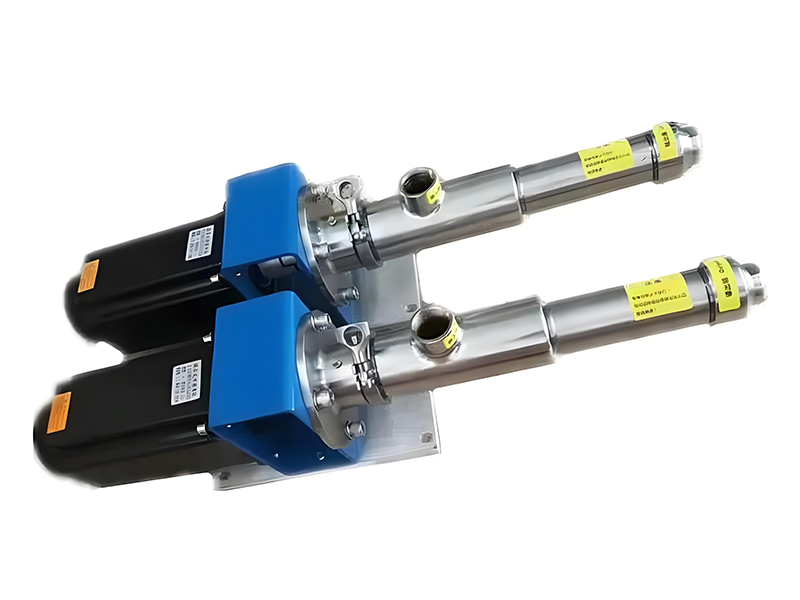
Choosing the right screw pump for food and beverage industry applications is a critical decision for manufacturers
who need reliable, hygienic, and efficient fluid handling. In food processing, beverage production, dairy operations, sauces, syrups,
edible oils, and other sanitary applications, the pump must do more than move product from one place to another. It must preserve
product quality, meet hygiene standards, handle a wide range of viscosities, support clean-in-place or washdown procedures, and
operate consistently under demanding production schedules.
A screw pump is often selected because it provides smooth, low-pulsation flow, can handle viscous and shear-sensitive
products, and delivers excellent suction performance. Unlike many centrifugal pump designs, a screw pump is well suited for products
that require gentle transfer and stable flow. This makes screw pumps highly valuable in food and beverage systems where texture,
flavor, and sanitary compliance matter.
This guide explains what a screw pump is, how it works, the main types used in food and beverage processing, the advantages of screw
pumps, key selection criteria, technical specifications, and practical considerations for hygienic operations. It is designed as
original, SEO-friendly content for blogs, category pages, and industry pages focused on food-grade pumping solutions.
A screw pump is a positive displacement pump that moves fluid through the rotating action of one or more screws.
The screw elements create sealed cavities that transport liquid from the inlet to the outlet with a steady and controlled flow.
In food and beverage environments, screw pumps are used to transfer liquids, semi-liquids, and products with varying viscosity
while minimizing shear, foaming, and product damage.
Because screw pumps are positive displacement pumps, they are capable of maintaining flow even when viscosity changes. This is a major
advantage in food processing lines where products may be thick, sticky, aerated, or temperature-sensitive. The pump’s geometry allows
it to handle materials such as chocolate, cream, yogurt, fruit concentrates, sauces, fillings, syrups, and edible oils with efficiency
and consistency.
In sanitary applications, the pump design must also support easy cleaning, safe product contact, and compliance with food safety
standards. That is why many food and beverage screw pumps are built with stainless steel wetted parts, polished surfaces, hygienic
seals, and drainable structures.
The food and beverage industry demands equipment that is sanitary, efficient, durable, and gentle on product integrity. A screw
pump for food and beverage applications helps solve many common process challenges:
These benefits make screw pumps ideal for many applications across dairy, beverage, bakery, confectionery, prepared foods, sauces,
and ingredient processing. As manufacturers continue to look for ways to improve output quality and process reliability, screw pump
technology remains a preferred solution for many sanitary fluid handling systems.
Screw pumps operate using rotating screw elements that move liquid along the pump housing. As the screws turn, they form enclosed
chambers that trap and convey fluid from the suction side to the discharge side. The movement is smooth and continuous, producing
low pulsation and stable pressure.
In a single-screw, twin-screw, or multi-screw design, the principle remains the same: the pump creates a positive displacement
action that allows controlled transfer of fluid. In food and beverage systems, this is valuable because product flow remains
predictable even when the material is thick or sensitive to agitation.
Screw pumps are also known for excellent suction performance, which helps when lifting product from tanks or vats. The consistent
movement supports transfer over varying distances and through pipelines used in production facilities.
There are several screw pump configurations used in sanitary processing. Understanding the differences helps buyers choose the right
pump for their specific application.
| Type of Screw Pump | Key Characteristics | Typical Food & Beverage Uses |
|---|---|---|
| Single Screw Pump | Simple design, good for viscous fluids, steady transfer, low shear | Syrups, purees, sauces, thick liquids, edible oils |
| Twin Screw Pump | Two intermeshing screws, excellent hygienic design, can handle CIP and product transfer | Dairy, beverages, chocolate, fillings, viscous food products |
| Progressive cavity pump | Rotating rotor and stator create cavities that move product smoothly | Paste, fruit concentrate, yeast, emulsions, nut pastes |
| Multi-Screw Pump | Higher efficiency, low pulsation, suitable for continuous process lines | High-throughput food processing, transfer systems, sanitary circulation |
Although the design details vary, all of these pump types may be considered within the broader category of screw pump technology.
The best choice depends on product viscosity, sanitary requirements, flow rate, pressure, temperature, and cleaning method.
A major reason screw pumps are used in sanitary processing is their combination of gentle handling and reliable performance. Below
are the core advantages that make them suitable for food-grade operations.
Many food products are sensitive to shear, agitation, or aeration. A screw pump provides smooth movement with minimal product
damage. This is important for items such as cream, yogurt, fruit-based products, dairy concentrates, and filled confectionery
mixtures where preserving appearance and texture is essential.
Screw pumps deliver fluid in a consistent stream rather than in sharp pulses. This helps reduce vibration, improves process control,
and supports accurate downstream operations such as filling, blending, and dosing.
One of the greatest strengths of a screw pump for food and beverage applications is its ability to move both low- and high-viscosity
fluids. Whether the product is a thin beverage ingredient or a thick sauce, the pump can maintain effective transfer.
Food-grade screw pumps can be manufactured with stainless steel wetted components, sanitary connections, polished internal surfaces,
and seal arrangements suited for hygienic processing. These features help support compliance with hygiene standards and reduce
contamination risk.
Many screw pumps offer good suction capability, which is useful for pulling product from tanks, drums, hoppers, or process vessels.
This can improve operational reliability and reduce priming issues.
In the right application, screw pumps can provide efficient fluid transport with stable output and fewer flow disturbances. This can
contribute to lower operating costs and improved process efficiency over time.
Screw pumps are used in a wide variety of food and beverage processes. Their versatility makes them suitable for many product
categories, especially those with challenging rheological properties.
| Application Area | Common Products | Why a Screw Pump Is Suitable |
|---|---|---|
| Dairy Processing | Milk, cream, yogurt, cheese mixes, whey, concentrated dairy products | Gentle transfer, sanitary design, viscosity flexibility |
| Beverage Production | Juices, concentrates, flavored syrups, beverage bases, liquid sweeteners | Stable flow, low foaming, good handling of thick ingredients |
| Confectionery | Chocolate, fillings, caramel, fondant, sugar-based blends | Low shear, temperature-sensitive product transfer |
| Sauces and Condiments | Ketchup, mayonnaise, dressings, paste, mustard, emulsions | Handles viscosity, preserves texture, reduces clogging |
| Prepared Foods | Soups, purees, baby food, meal bases, cooking sauces | Reliable flow for thick, particle-containing products |
| Ingredient Handling | Oil blends, flavorings, additives, semi-liquid ingredients | Versatile transfer across processing stages |
Selecting the right screw pump for food and beverage industry needs requires careful evaluation of product characteristics,
operational conditions, and sanitary requirements. The following selection criteria are among the most important.
Viscosity is one of the most important factors in pump selection. Thin liquids, medium-viscosity products, and very thick materials
all behave differently. A screw pump should be matched to the actual product viscosity at the operating temperature, not only the
nominal room-temperature value.
Some food products contain fruit pieces, seeds, pulp, grains, spices, or particulate matter. The pump must be able to pass solids
without damage or blockage. The size and hardness of the particles will influence screw geometry and clearance requirements.
The desired flow rate depends on the production line capacity and process speed. A pump must deliver enough product to maintain
throughput without creating excessive pressure or unnecessary mechanical load.
Screw pumps are used in transfer, feeding, and circulation duties. It is important to define discharge pressure, backpressure, and
system resistance so the pump can be properly sized. Oversizing or undersizing may reduce performance and increase wear.
Food and beverage pumps must support hygiene. When selecting a screw pump, look for food-grade materials, cleanable construction,
sanitary fittings, and seal arrangements that support contamination control and washdown procedures.
Many processing lines require CIP (Clean-in-Place) or SIP (Sterilize-in-Place) capabilities. The pump
should be compatible with the required cleaning protocol and resistant to the chemicals, temperatures, and flow patterns used in
sanitation routines.
Some products are processed hot, while others are chilled. The pump materials, seals, and internal clearances must be suitable for
the expected operating temperature range. Temperature can affect viscosity, seal life, and overall pump behavior.
If the product is sensitive to shear, foaming, or excessive mixing, a screw pump is often preferred. This is especially relevant for
emulsions, aerated mixtures, and delicate dairy or beverage products.
All wetted materials must be compatible with the food product and the cleaning chemicals used in the facility. Stainless steel is
commonly selected for sanitary food pump applications due to its corrosion resistance and cleanability.
The right pump should not only perform well initially but also remain dependable over time. Consider seal wear, component replacement,
maintenance intervals, and total lifecycle cost when comparing screw pump options.
When evaluating screw pumps, technical specifications help determine whether the unit matches process requirements. The table below
highlights common specification categories used in food and beverage applications.
| Specification | Why It Matters | Typical Considerations |
|---|---|---|
| Flow Rate | Determines how much product the pump can move per unit of time | GPM, L/min, m3/h depending on application |
| Pressure Rating | Shows the maximum discharge pressure the pump can safely handle | Transfer, circulation, feeding, and pipeline resistance |
| Viscosity Range | Confirms compatibility with thin, medium, or thick products | Product behavior at actual processing temperature |
| Temperature Range | Ensures pump materials and seals can handle process heat or chill | Hot-fill, ambient transfer, refrigerated products |
| Wetted Materials | Must meet sanitary and corrosion-resistance requirements | Stainless steel, food-grade elastomers, polished surfaces |
| Seal Type | Affects leakage prevention, hygiene, and maintenance needs | Mechanical seals, hygienic seal designs, flush arrangements |
| Connection Type | Impacts integration with existing piping and sanitary systems | Clamp, flange, or hygienic process connections |
| Cleanability | Supports sanitation and reduces downtime | CIP/SIP compatibility, drainability, surface finish |
Food and beverage plants often compare screw pumps with centrifugal pumps, lobe pumps, gear pumps, and diaphragm pumps. Each pump
type has strengths, but screw pumps stand out in specific sanitary applications.
| Pump Type | Main Strength | Limitation Compared to Screw Pumps |
|---|---|---|
| Centrifugal Pump | Good for low-viscosity liquids and high flow | Less effective with thick or shear-sensitive products |
| Lobe Pump | Sanitary design and solids handling | May be less efficient for some viscous transfer duties |
| Gear Pump | Good for accurate metering and viscous fluids | May create more shear and is not always ideal for delicate products |
| Diaphragm Pump | Can handle abrasive and difficult fluids | Often more pulsating and less smooth in continuous food transfer |
| Screw Pump | Smooth flow, low shear, excellent viscosity handling | Requires proper sizing and hygienic selection |
In food-grade environments, pump construction is just as important as performance. Screw pumps used in food and beverage processing
are commonly designed with materials and finishes that support sanitation and durability.
When these features are properly specified, the screw pump can integrate well into a hygienic processing environment and help protect
both product quality and food safety.
Several operating factors influence how a screw pump performs in food and beverage applications:
Proper pump selection must account for these variables to ensure dependable operation in real processing conditions. A pump that performs
well on paper may still underperform if the application details are not correctly defined.
Hygiene is a core requirement in any screw pump for food and beverage industry use. Pumps in contact with consumable products must
be designed to minimize contamination risk, support thorough cleaning, and comply with internal quality standards.
Important hygiene considerations include surface finish, seal design, drainage capability, compatibility with cleaning chemicals,
and dead-zone reduction. In many food plants, a hygienic pump selection strategy helps reduce microbiological risk, improve product
consistency, and support regulatory compliance.
Food and beverage processors should also confirm whether the pump is suitable for the facility’s sanitation program. If CIP is used,
the pump should tolerate cleaning solution flow, temperature, and cycle duration. If product recovery is important, the design should
also help reduce product hold-up and waste.
Even though screw pumps are versatile, improper selection can lead to performance issues. Common mistakes include:
Avoiding these mistakes improves uptime, reduces maintenance, and supports reliable sanitary production.
The following checklist can help buyers define requirements before selecting a screw pump for food and beverage industry use.
| Checklist Item | Questions to Answer |
|---|---|
| Product Type | What liquid, semi-liquid, or viscous product will be pumped? |
| Viscosity | What is the product viscosity at actual process temperature? |
| Solids Content | Does the product contain particles, pulp, seeds, or chunks? |
| Flow Requirement | What flow rate is needed per hour, minute, or batch cycle? |
| Pressure Requirement | What discharge pressure and pipeline resistance must be overcome? |
| Temperature Range | What is the minimum and maximum process temperature? |
| Cleaning Method | Will the pump require CIP, SIP, or manual cleaning? |
| Material Compatibility | Are wetted parts compatible with product and sanitation chemicals? |
| Installation Environment | Is the system indoor, washdown, chilled, or high-temperature? |
| Maintenance Expectations | How often will inspection, seal replacement, or servicing be required? |
For processors searching for a screw pump for food and beverage industry needs, the most important benefits are
gentle handling, stable flow, hygienic design, and reliable performance with viscous products. These pumps are highly valued in
food-grade operations because they help preserve product quality while supporting efficient transfer and sanitary processing.
Whether used for dairy, sauces, beverages, confectionery, or ingredient transfer, a properly selected screw pump can improve
operational control and reduce common pumping problems such as pulsation, foaming, clogging, and excessive shear. For many
manufacturers, it is one of the most practical choices for continuous and hygienic fluid handling.
For SEO and content relevance, the following keyword phrases are commonly associated with this topic: screw pump for food and beverage
industry, food grade screw pump, Sanitary Screw Pump, hygienic pump for food processing, positive displacement pump, viscous liquid
transfer, low shear pump, CIP compatible pump, stainless steel food pump, and hygienic fluid transfer pump.
Selecting the right screw pump for food and beverage industry applications requires a balance of performance, hygiene, and long-term
reliability. The best pump is not simply the one with the highest flow rate or the strongest pressure rating. It is the one that
matches the product, fits the process, supports sanitation, and delivers consistent output over time.
By reviewing viscosity, solids content, cleaning requirements, pressure conditions, temperature range, and material compatibility,
food and beverage manufacturers can make informed pump selection decisions. With the correct specifications in place, screw pumps
can deliver dependable, gentle, and efficient performance across a wide range of sanitary processing operations.

Copyright ? Jiangsu Longjie Pump Manufacturing Co., Ltd.



 Phone
Phone
Comment
(0)